
Stardew Valley

Images
Related apps





Description
Eric Barone built Stardew Valley by himself. 4 years. Every pixel, every line of dialogue, every track of music. When it launched on PC in 2016, it sold 1 million copies in 2 months. The Android port arrived in 2019, and it’s the same complete game – nothing stripped out, nothing gated behind subscriptions or in-app purchases.
Table of Contents
You inherit a neglected farm from your grandfather. Your old corporate job is gone. You’ve got a handful of seeds, a rusty watering can, and 28 days until the first harvest festival. That’s the setup.
What kind of game is Stardew Valley?
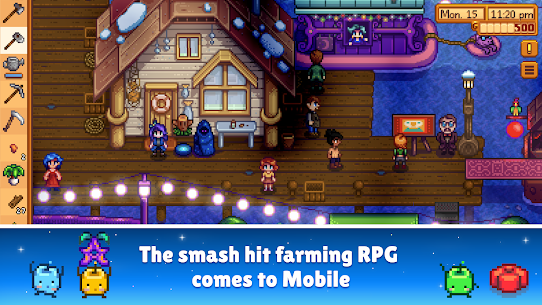
It’s a farming RPG. You grow crops, raise animals, mine for ore, fish in 5 different locations, cook 80+ recipes, and build real relationships with 30+ villagers. Each villager has a daily schedule, a backstory, and actual opinions about you based on what you do.
The game runs on a seasonal calendar. Spring, summer, fall, winter. Each season is 28 in-game days. Different crops grow in different seasons, so if you miss the planting window, you wait another 28 days. That structure – small decisions, real consequences – is why people hit 300 hours without noticing.
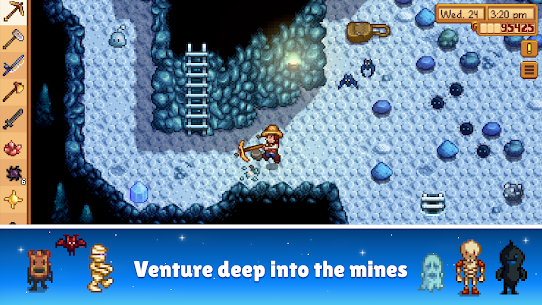
Combat is also in here. The mines under Pelican Town run 120 floors deep. You fight slimes, bats, shadow brutes, and worse. Below that is the Skull Cavern, with no floor limit. It goes as deep as you’re willing to push.
Why the Android version holds up
The mobile port wasn’t rushed. Touch controls were designed specifically for the small screen. You can also connect a Bluetooth controller if you’d rather play that way.
The save system fits how mobile gaming actually works. You can suspend mid-day and come back later without losing progress. On a phone, that’s not optional – it’s necessary.
ConcernedApe still updates the mobile version directly. Version 1.5 added a new late-game island called Ginger Island, 4 new farm types, and 100+ hours of additional content. It hit mobile. Version 1.6 came to Android in 2024 with new festivals, expanded character dialogue, 8 more farm types, and reworked late-game systems. If you download now, you’re getting all of it.
Core gameplay features
Farming and crop progression
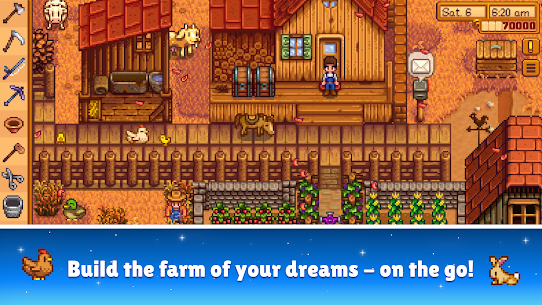
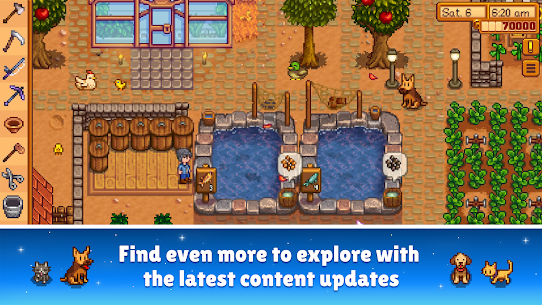
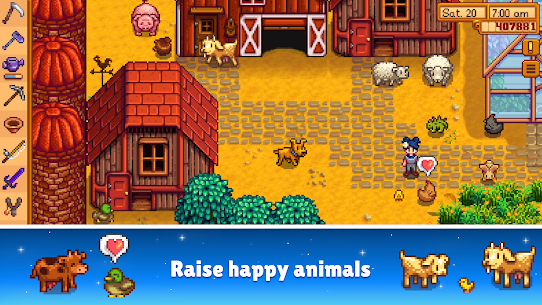
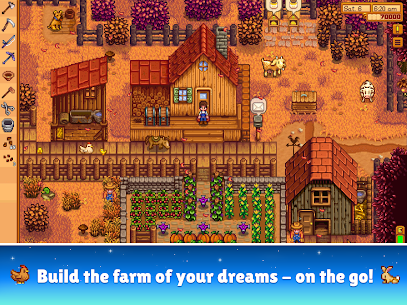
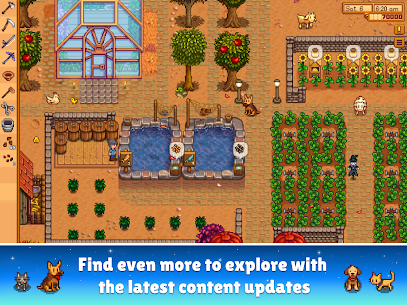
You start with 15 parsnip seeds. By year 2, you can have sprinklers automating the watering, a barn full of animals, and a shed packed with kegs fermenting artisan goods. By year 3, a greenhouse grows ancient fruit year-round – the most profitable crop in the game.
The progression feels earned. You don’t get a sprinkler until you’ve manually watered crops long enough to understand exactly why you want one.
Mining and resource gathering
The mines open on day 5. Each floor has ore, gems, artifacts, and enemies. Copper comes first, then iron, then gold. The deepest floors have iridium, the rarest material. You can’t automate the mines. You go in, you push floors, you come back with what you find.
Some of the best character dialogue only unlocks after you donate specific artifacts to the town museum. Mining isn’t just about ore.
Fishing
Fishing has its own minigame. A bar moves vertically on screen, and you hold or release to keep it aligned with the fish icon. Different fish appear in different seasons, different weather conditions, and different locations. Some only show up at night. Some only appear when it’s raining.
There are 80 fish in the game. Catching all of them is one of the harder completionist goals, and the community takes it seriously.
Relationships and marriage
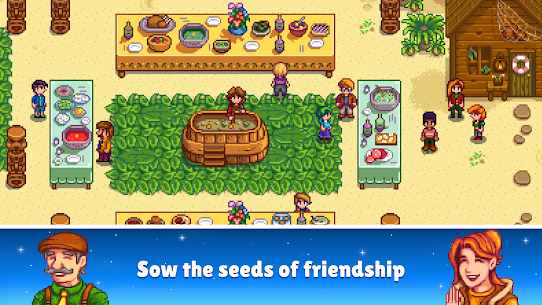
Giving gifts is the main way to build friendship. Each villager has 2 gifts they love and several they like. Give the wrong gift and friendship actually drops. You have to learn the characters.
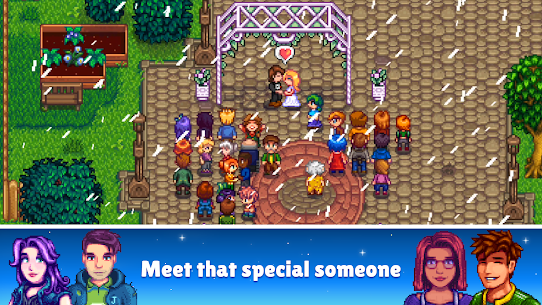
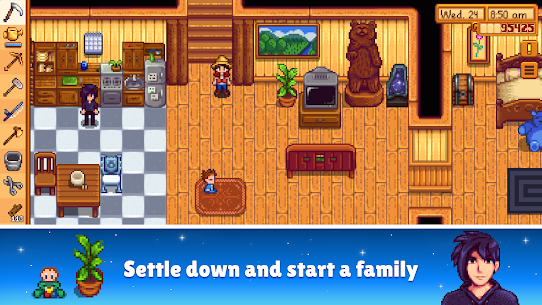
12 of the 30 villagers are romanceable. You can date one by giving them a bouquet at 8 hearts, and marry them at 10 hearts with a Mermaid’s Pendant. Your spouse moves in, helps on the farm, and gets new daily dialogue. The relationships feel like they evolve, not just level up.
The Community Center
This is the main story objective. The Community Center is a crumbling building in town with 6 rooms inside. Each room has bundles of items to complete: farm produce, foraged goods, fish, minerals, cooked dishes. Complete all 6 and the building is restored.
The rewards change the whole town. A bus route opens. A greenhouse appears on your farm. The mine cart system reactivates. The town physically changes based on what you accomplish.
There’s an alternate path too. You can sell the Community Center to Joja Corporation and pay cash to complete equivalent tasks. The game doesn’t punish you for it. Both paths lead to the same outcome, different story.
Multiplayer co-op
Version 1.5 brought multiplayer to mobile. Up to 4 players can share one farm. One player hosts, others join as farmhands with their own cabin on the property.
Everything is shared – the economy, the calendar, the story progress. Each player builds their own friendships with villagers and can pursue their own romance independently. That last part creates situations the game clearly anticipated and enjoys.
Stardew Valley Android system requirements
The game runs on Android 5.0 and above. Storage footprint is around 280MB after install. No internet required to play – it works fully offline once downloaded.
Low-end devices handle it fine. The graphics are 16-bit pixel art by design, so hardware demands are light. Older phones might have slightly longer loading screens on first launch, but gameplay itself stays smooth.
Tips before you start your first farm
Don’t try to do everything in year 1. The game rewards patience. Pick one focus – farming, fishing, or mining – and get good at it. The rest follows naturally as the seasons go by.
Talk to every villager every day. Even a quick conversation adds friendship points. Some hand you recipes. Others give items. Krobus (in the sewers, reachable mid-game) sells void eggs every Friday, which matters more than it sounds once you understand artisan goods.
Check the TV every morning before you head out. It shows tomorrow’s weather. Rain means you don’t have to water crops, freeing up your stamina entirely for the mines or fishing.
Don’t run out of energy mid-afternoon. Every action costs stamina. Foraged items like salmonberries (free in spring) restore it cheaply. Keep something in your inventory for the long days.
Is it worth downloading?
ConcernedApe charges a one-time price of $4.99 for the mobile version. No ads. No in-app purchases. No energy systems. You pay once, you get everything.
The PC version on Steam costs $14.99. Same game.
The Play Store listing has a 4.7-star rating across 600,000+ reviews. The complaints are almost all about controller mapping preferences or cloud save quirks. The game itself gets near-universal praise.
If you’ve got a commute, a lunch break, or just want something real to sink into, this is the answer.
What's new
-Various bug fixes for the 1.6 update.
Video
Download links
An ad will pop up before the download. Close it, click download again—ads keep us going, thanks!


