GTA: Liberty City Stories

GTA Liberty City Stories APK Info
The Grand Theft Auto: Liberty City Stories Mod APK offers a specific enhancement focused solely on the “Unlimited Money” feature, fundamentally changing the game’s economy for the player. Upon starting the game, Toni Cipriani is equipped with infinite funds, eliminating the need to grind through taxi fares or vigilante missions just to afford basic supplies. This modification ensures that players can immediately purchase top-tier body armor, heavy weaponry from Ammu-Nation, and frequent vehicle resprays without ever worrying about their bank balance. It streamlines the experience for those who want to focus purely on the narrative and chaos of Liberty City without the financial constraints of the original progression system.
Images
Related apps


Description
In the mid-2000s, the video game industry was undergoing a significant shift. Home consoles like the PlayStation 2 were at the peak of their popularity, delivering sprawling 3D worlds that players could get lost in for hours. Grand Theft Auto: San Andreas had just redefined what was possible in an open-world game. However, the handheld market was still largely dominated by 2D experiences. Enter the PlayStation Portable (PSP) and its “killer app,” Grand Theft Auto: Liberty City Stories.
Table of Contents
Released in October 2005, Liberty City Stories was more than just a spinoff; it was a technical marvel. It promised—and delivered—the full, uncompromising 3D Grand Theft Auto experience on a handheld device. There were no top-down perspectives or severely compromised cities; this was Liberty City in its entirety.
Serving as a prequel to the genre-defining Grand Theft Auto III, the game returns players to the grim, grey streets of Liberty City, but turns the clock back to 1998. It tells the story of Toni Cipriani, a mobster trying to reclaim his spot in the Leone crime family hierarchy. Today, the game stands as a crucial chapter in the “3D Universe” saga, and its release on mobile platforms has preserved its legacy for a new generation of players.
The Setting: Liberty City, circa 1998
While the map in Liberty City Stories is topographically identical to the one found in GTA III, the atmosphere and specific landmarks are distinctly different, reflecting a city three years prior to the events of the 2001 classic. Rockstar Leeds did an exceptional job of retrofitting the city to feel familiar yet noticeably younger.
A City in Transition
The most striking difference for returning players is the transportation infrastructure. In 2001, the Porter Tunnel seamlessly connects Portland, Staunton Island, and Shoreside Vale. In 1998, this tunnel is still under construction. Large sections of the project are incomplete, forcing citizens to rely on the Liberty City Ferry Service. These ferries run between Portland (Harwood) and Staunton Island (Rockford), adding a slower, more methodical pace to inter-island travel in the early game.
The Fate of Fort Staunton
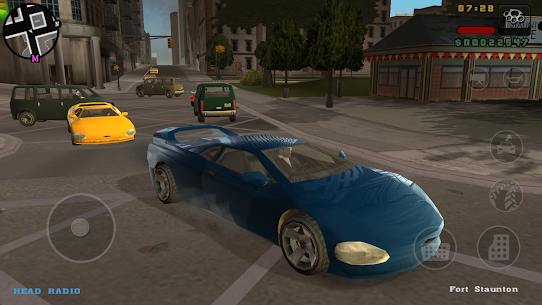
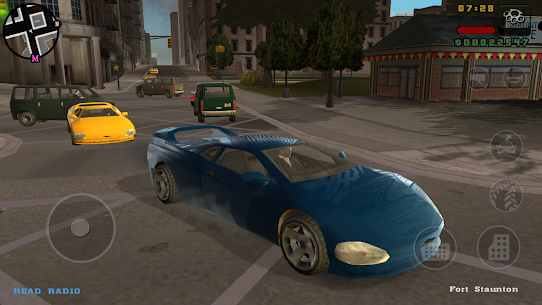
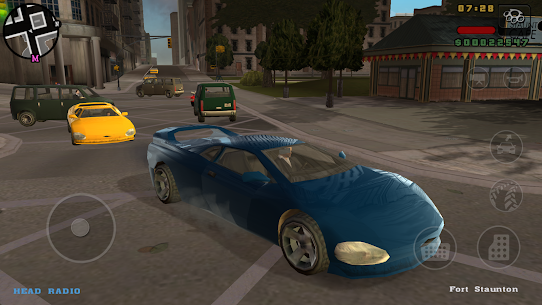
One of the most significant narrative and geographic changes involves the district of Fort Staunton on Staunton Island. In GTA III, this area is a desolate construction site for the “Staunton Plaza.” In Liberty City Stories, it is a vibrant, bustling “Little Italy” district, complete with an opera house, museums, and restaurants. It represents the height of Italian-American mafia influence before its eventual decline. The destruction of this district is a key plot point in the game, showcasing how the city physically changes in response to the criminal underworld’s actions.
Other Geographic Shifts
- The Callahan Bridge: The bridge connecting Portland to Staunton is also under construction, initially isolating the player on the first island.
- Cemeteries and Parks: There is a cemetery in Staunton Island near the cathedral in 1998 that has been replaced by a large building by 2001, subtly commenting on the city’s rapid, often disrespectful urban development.
- Atmosphere: The weather in Liberty City Stories often feels colder and gloomier, with a distinct color palette that leans towards wintry greys and muted oranges, differentiating it from the greener, grittier look of GTA III.
The Narrative: The Rise of Toni Cipriani
The narrative of Liberty City Stories is a classic mob tale, heavily inspired by films like Goodfellas and The Godfather. It explores themes of loyalty, tradition, and the modernization of organized crime.
The Protagonist: Antonio “Toni” Cipriani
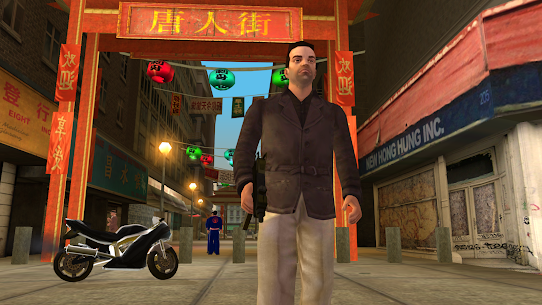
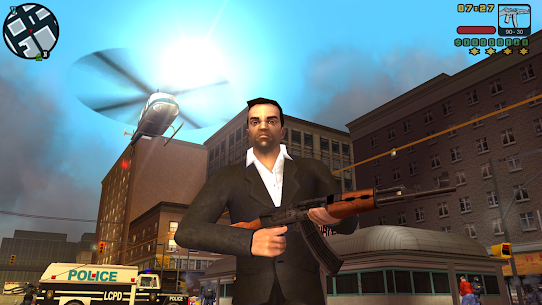
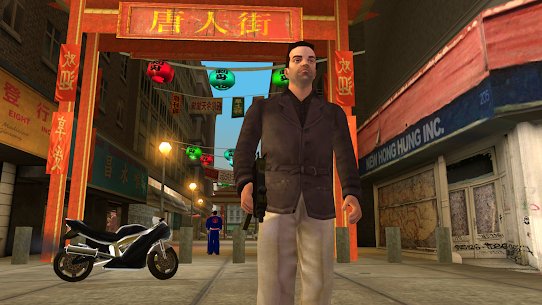
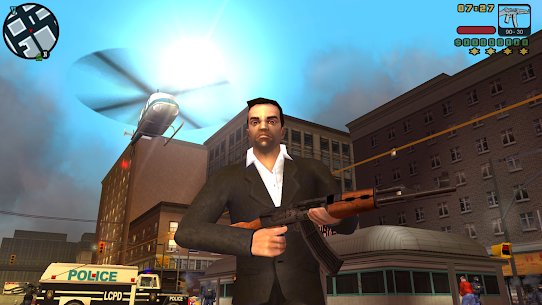
Players take on the role of Toni Cipriani, a character first introduced as a quest-giver in GTA III. Toni has just returned to Liberty City after lying low for several years following a murder committed on behalf of the Leone family. He returns expecting a hero’s welcome, only to find that the hierarchy has shifted. He has been demoted to the bottom of the ladder, forced to work his way back up under the command of the slimy and arrogant Vincenzo Cilli.
Toni is a stark contrast to GTA: San Andreas’ CJ or Vice City’s Tommy Vercetti. He is a soldier in the truest sense—loyal to a fault, violent, and driven by a desperate need for validation, particularly from two figures: his boss, Salvatore Leone, and his mother.
Ma Cipriani
One of the most memorable aspects of the story is Toni’s relationship with his mother. Ma Cipriani is a caricature of the overbearing Italian mother, but with a dark, homicidally disappointed twist. She constantly compares Toni to his deceased father, a “real man” in her eyes. Her disappointment in Toni is so profound that she eventually puts a hit out on her own son, forcing Toni to dodge assassins while trying to prove his worth. This subplot provides some of the game’s darkest humor and most stressful moments.
The Leone Family War
The core plot revolves on the Leone family’s struggle to maintain dominance against the encroaching Sindacco and Forelli families. The story documents the decline of the traditional mafia. As the game progresses, we see the rise of newer, more chaotic gangs and the interference of corrupt politicians like Donald Love. Toni acts as the muscle that (temporarily) holds the old world together, even as he unwittingly paves the way for the chaos that Claude Speed will unleash three years later.
Gameplay Mechanics: Classic Formula, Portable Execution
Liberty City Stories is built on the same engine framework as Vice City and San Andreas, but it was optimized heavily for the PSP’s hardware.
Missions and Structure
Recognizing the portable nature of the PSP, Rockstar Leeds designed missions to be generally shorter and more action-oriented than the console counterparts. The multi-stage marathons of San Andreas were replaced with “bite-sized” chaos—perfect for playing on a bus ride. However, this didn’t mean the difficulty was lowered; LCS is notorious for some surprisingly difficult combat encounters and chase sequences.
Vehicles and Motorcycles
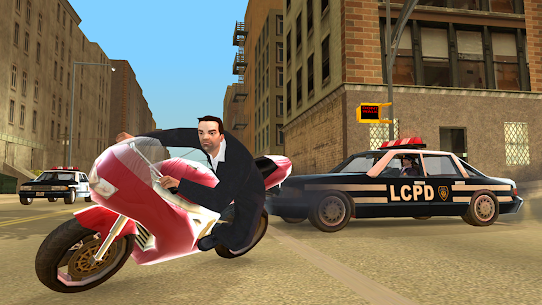
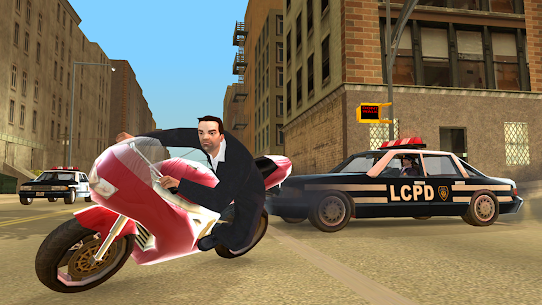
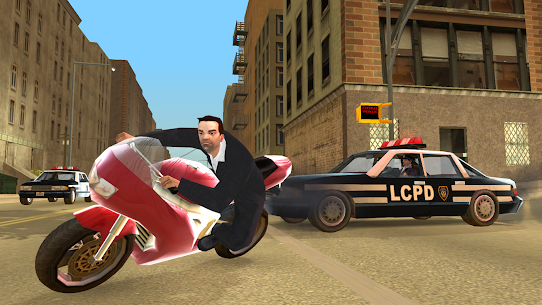
A major gameplay addition over GTA III is the inclusion of motorcycles. In GTA III, motorcycles were famously banned in Liberty City (explained in the manual as a public safety measure). In 1998, they are legal and plentiful.
- Sport Bikes: The PCJ-600 makes a return, allowing for high-speed stunts.
- Choppers: The Freeway and Angel provide a heavier, biker-gang aesthetic.
- Scooters: The Faggio allows for nimble, albeit humiliating, navigation through traffic.
The ability to weave through traffic on two wheels fundamentally changes how players navigate the narrow streets of Portland and Staunton Island, making the city feel faster and more accessible.
Side Content and Minigames
The game is packed with unique side activities that flesh out the world:
- Trash Dash: A side mission where Toni drives a garbage truck, collecting dumpsters. It sounds mundane but is actually a frantic race against time.
- Car Salesman: Toni works at a car dealership, where he must demonstrate vehicles to customers by driving in specific ways (e.g., driving fast for a thrill-seeker, or driving slowly and safely for a cautious buyer).
- Slash TV: A bizarre minigame where players must survive waves of enemies while wearing a hockey mask, a clear homage to classic slasher films.
- Avenging Angels: A vigilante mode where Toni teams up with a group of beret-wearing guardian angels to clean up the streets.
Multiplayer (PSP Exclusive)
The original PSP release featured a robust multiplayer suite for up to six players via Ad-Hoc Wi-Fi. Modes included “Liberty City Survivor” (Deathmatch), “Street Rage” (Racing), and “Tanks for the Memories” (Tank survival). It was a groundbreaking feature for a handheld open-world game, though it was sadly cut from the PS2 and mobile ports.
Development History: The PSP Miracle
The development of Liberty City Stories was a significant technical challenge. Rockstar Leeds, a studio specializing in handheld technology, worked in conjunction with Rockstar North.
Overcoming Hardware Limits
The PSP, while powerful, ran off Universal Media Discs (UMDs), which had slow read speeds and limited storage (1.8 GB). To make an open world stream without constant loading screens, the developers had to utilize aggressive compression and streaming techniques. The game engine was rewritten to handle the PSP’s unique architecture. The result was a game that looked remarkably close to the PS2 era titles, albeit with a lower draw distance and lower resolution textures.
The PS2 Port
In 2006, due to high demand, Rockstar ported the game to the PlayStation 2. This version was released as a budget title. While it allowed players without a PSP to experience the story, it was criticized for its lower graphical fidelity compared to San Andreas (which had been released on PS2 years prior) and the removal of the multiplayer features. However, it sold extremely well due to its low price point and the insatiable appetite for GTA content.
The Mobile Edition: The Definitive Way to Play?
In late 2015 and early 2016, Rockstar released Liberty City Stories for iOS and Android devices. This was not a simple emulation; it was a substantial remaster that arguably stands as the definitive version of the game today.
Visual Overhaul
The mobile port features significant graphical improvements over the PSP and PS2 originals:
- High-Resolution Textures: Character models, cars, and building textures were updated to look crisp on high-DPI phone screens.
- Real-Time Lighting: The flat lighting of the original was replaced with a dynamic lighting and shadow system, giving the city much more depth and atmosphere, particularly at night.
- Draw Distance: The “fog” that plagued the PSP version to hide loading geometry was pushed back significantly, allowing players to see across the islands.
Controls and Usability
Adapting a controller-heavy game to a touchscreen is always risky, but Rockstar implemented several smart features:
- Rebalanced Controls: The game uses a virtual analog stick and context-sensitive buttons. The driving physics were slightly tweaked to be more forgiving on touch inputs.
- Physical Controller Support: The Android and iOS versions support Bluetooth controllers (like the Backbone, Razer Kishi, or standard Xbox/PS controllers). Playing with a controller effectively turns the mobile version into a high-definition console release.
- Mission Tweaks: Checkpoints were added to missions to reduce frustration, acknowledging that mobile gaming sessions are often interrupted.
Cross-Platform Saves
The mobile version utilizes the Rockstar Social Club to allow for cloud saves. This means a player could start a mission on their iPad at home and finish it on their Android phone while commuting, a forward-thinking feature that bridged the platform gap.
Custom Soundtrack: “The Mixtape”
One of the best features of the original Xbox and PC GTA games was the ability to play your own music. The mobile version brought this back. Players can create a playlist on their device named “GTALCS,” and a new radio station called “Mixtape” will appear in the game vehicles, playing the user’s custom music interspersed with standard GTA radio commercials.
Critical Reception and Legacy
Upon its initial release in 2005, Liberty City Stories was met with critical acclaim. It currently holds a score of 88/100 on Metacritic. Critics praised it for proving that a “real” game could exist on a handheld. It wasn’t a watered-down spinoff; it was a full sequel in everything but name.
Sales Success
The game was a commercial juggernaut. It became the best-selling game of all time for the PSP, moving over 8 million copies worldwide. It was a system seller, convincing millions of gamers that the PSP was a necessary purchase.
Cultural Impact
Liberty City Stories bridged the gap between the silent protagonist of GTA III and the voiced, personality-driven narratives of Vice City and San Andreas. By giving a voice to Toni Cipriani, it retroactively added depth to GTA III, making the player’s interactions with Toni in the 2001 timeline feel more tragic. We see a man who sacrificed everything for his family, only to end up an overweight, paranoid Capo shouting at his mother in a restaurant.
The “Stories” Sub-series
The success of LCS led directly to the development of Grand Theft Auto: Vice City Stories a year later. Together, these two games represent a unique era in Rockstar’s history where they were willing to revisit their most iconic maps to tell new stories, a practice fans have been clamoring for them to return to ever since.
Conclusion
Grand Theft Auto: Liberty City Stories is often overshadowed by the “Big Three” of the PS2 era (III, Vice City, San Andreas), but it deserves to be recognized as a classic in its own right. It captures a specific moment in the history of Liberty City—a moment of transition, mafia warfare, and darker, grittier storytelling.
For modern players, the Android and iOS versions are surprisingly robust. They offer the best visuals, the most convenient save systems, and, crucially, the ability to play with a physical controller. Whether you are a veteran of the series looking to see how Toni Cipriani became the Made Man he is, or a newcomer looking for an open-world fix on the go, Liberty City Stories remains a trip worth taking.
Pros:
- Classic GTA formula perfectly adapted for short bursts of play.
- Fascinating “prequel” look at Liberty City (ferries, Fort Staunton).
- Excellent voice acting and writing, particularly the Cipriani family drama.
- Mobile port looks significantly better than the original console releases.
- Great soundtrack that captures the East Coast hip-hop and house vibes of 1998.
Cons:
- On-foot combat can feel dated compared to modern shooters.
- The city is smaller than San Andreas, which released a year prior.
- Some missions can be frustratingly difficult without checkpoints (in the original versions).
Final Verdict: An essential chapter in the Grand Theft Auto saga that proves big things can come in small packages.
What's new
General bug fixes and improvements.
Download links
An ad will pop up before the download. Close it, click download again—ads keep us going, thanks!