GTA Vice City

MOD Info
The GTA Vice City Mod APK transforms the mobile gaming experience by granting players the coveted “Unlimited Money” feature right from the start. Unlike the standard version where cash must be earned through grinding missions and assets, this modification allows Tommy Vercetti to immediately purchase every safehouse, high-end weapon, and luxury vehicle available. It removes the financial barriers of the 1980s criminal underworld, letting players focus entirely on the chaotic action and narrative without the need to hustle for dollars.
Images
Related apps




Description
In the annals of video game history, few titles have managed to capture the zeitgeist of a specific era as perfectly as Grand Theft Auto: Vice City. Released in late 2002, just a year after the groundbreaking Grand Theft Auto III revolutionized the industry with its 3D open world, Vice City took that formula and injected it with a lethal dose of 1980s style, excess, and attitude.
Table of Contents
While GTA III was a gritty, sepia-toned look at a generic East Coast metropolis, Vice City was an explosion of pastel pinks, cyans, and neon lights. It didn’t just pay homage to the 1980s; it transported players there. From the moment the game boots up to the sounds of the Commodore 64 loading screen, players are immersed in a world of rolled-up suit sleeves, brick-sized mobile phones, glam metal, and cocaine-fueled ambition.
This article serves as a comprehensive chronicle of Tommy Vercetti’s rise to power. We will dissect the city’s geography, analyze the narrative arcs, critique the gameplay mechanics, explore the legendary soundtrack, and uncover the deepest secrets hidden within the game’s code. Whether you are a veteran who remembers the struggle of the “Demolition Man” mission or a newcomer playing on a mobile device, this is the definitive guide to the city where cash is king.
The Setting: Welcome to Vice City
Vice City is more than just a backdrop; it is a living, breathing character in the game. Heavily inspired by Miami, Florida, during the height of the drug trade in 1986, the map is a masterclass in atmospheric design. Unlike the dreary Liberty City, Vice City feels hot, humid, and dangerous.
The map is split into two main islands, separated by a large body of water, with a smaller island (Starfish Island) and a few islets in between.
1. Vice City Beach (The East Island)
This is the glitzy, tourist-heavy side of the map where players begin their journey. It represents the veneer of wealth and happiness that hides the city’s rotting core.
- Ocean Beach: The jewel of the city. Ocean Drive is lined with Art Deco hotels, neon signs, and roller-skating pedestrians in bikinis. It is the center of the city’s nightlife and the location of Tommy’s first safehouse, the Ocean View Hotel. The area screams “vacation,” but the alleyways tell a different story of drug deals gone wrong.
- Washington Beach: Located just north of Ocean Beach, this district is slightly more residential but retains the high-end feel. It houses the Washington Mall construction site and Ken Rosenberg’s law office.
- Vice Point: The northernmost tip of the east island. This is where the middle class lives and shops. It features the massive North Point Mall, a hub of consumerism where players can buy clothes, weapons, and food. The “Mall Shootout” mission takes place here, utilizing the multi-floor layout for chaotic combat.
2. The Mainland (The West Island)
Cross the bridges to the west, and the glamour fades. This is the industrial and working-class heart of the city, where the real crime happens.
- Downtown: The financial and political center. Skyscrapers dominate the skyline, including the Hyman Memorial Stadium where dirt bike challenges and demolition derbies are held. It feels colder and more oppressive than the beach.
- Little Havana: Territory of the Cubans, led by Umberto Robina. The streets are lined with small businesses, cafes, and red-brick buildings. It is a place of fiery passion and violent turf wars with their Haitian neighbors.
- Little Haiti: Controlled by Auntie Poulet and the Haitians. This area is run-down, with shacks and a palpable sense of poverty. The local print works—later a crucial asset for Tommy—is located on the border of this district.
- Escobar International Airport: A sprawling complex in the south. Named after the infamous drug lord (a not-so-subtle nod to the game’s inspirations), the airport is a playground for stunt jumps and high-speed chases on the runway.
- Viceport: The industrial harbor where ships dock. It is a maze of crates, cranes, and workers, often the site of smuggling operations.
3. The Islands Between
- Starfish Island: The Beverly Hills of Vice City. This exclusive island is home to the city’s wealthiest elite. Massive mansions with swimming pools and private guards line the streets. At the center sits the Vercetti Estate (formerly the Diaz Mansion), the ultimate symbol of power in the game.
- Prawn Island: Once a wealthy district, now a decaying ruin controlled by the Streetwannabes gang. The InterGlobal Film Studio, where Tommy produces “art films,” is the only functioning business here, surrounded by abandoned mansions.
The Story: Rise of the Vercetti Empire
The narrative of Vice City is a pastiche of classic crime films, most notably Brian De Palma’s Scarface and Carlito’s Way. It tells the story of Thomas “Tommy” Vercetti, a made man from the Forelli crime family in Liberty City.
The Setup
After serving fifteen years in prison for a massacre he committed in Liberty City (keeping his mouth shut to protect the family), Tommy is released in 1986. His boss, Sonny Forelli, is nervous. Tommy is too well-known, and his return could bring heat to the family’s operations. Sonny sends Tommy to Vice City to oversee an important drug deal, hoping to expand the Forelli operations into the south and keep Tommy out of the way.
The Betrayal
The deal, set up by crooked lawyer Ken Rosenberg, takes place at the humid docks. It’s a setup. Ambushed by masked gunmen, the buyers and bodyguards are killed. Tommy, Ken, and the pilot barely escape, losing both the money and the cocaine.
Tommy calls Sonny to deliver the bad news. Sonny is furious and demands his money and drugs back, threatening to kill Tommy if he fails. This sets the stage for the entire game: Tommy is a man with a debt hanging over his head, trapped in a strange city with no allies.
Building Alliances
Tommy starts with nothing but a shirt on his back and a cheap hotel room. He slowly builds a network of associates:
- Ken Rosenberg: A neurotic, cocaine-addicted lawyer who serves as Tommy’s nervous conscience and connection to the legal world.
- Colonel Juan Cortez: A retired Latin American colonel who acts as a broker for the criminal underworld. He helps Tommy identify the people who ambushed the deal.
- Lance Vance: The brother of the dealer killed in the ambush. Lance seeks revenge and teams up with Tommy. Their relationship is the emotional core of the story—a “buddy cop” dynamic that slowly sours into jealousy and betrayal.
- Avery Carrington: A Texan real estate mogul who teaches Tommy that land is the true power. He is a caricature of capitalist greed, willing to start gang wars just to lower property values.
- Ricardo Diaz: The volatile, paranoid drug lord of Vice City. Tommy initially works for him, only to discover that Diaz was the one who orchestrated the ambush.
The Takeover
In a pivotal mission, “Rub Out,” Tommy and Lance storm Diaz’s mansion, eliminating him in a hail of gunfire. Tommy takes the mansion—and the empire—for himself. This marks the shift in the game from “paying debts” to “empire building.” Tommy is no longer just a soldier; he is the Kingpin of Vice City.
The Climax: “Keep Your Friends Close…”
As Tommy’s power grows, so does Sonny Forelli’s impatience. Lance, feeling marginalized and underappreciated by Tommy, secretly defects to Sonny’s side. In the final confrontation, Sonny arrives at the Vercetti Estate with an army of mafia soldiers to take what he believes is his.
In a dramatic twist, Lance reveals his betrayal openly. Tommy, alone against the world, fights his way through the mansion, killing Lance on the rooftop helipad and finally eliminating Sonny in the main hall. The game ends with Tommy and Ken Rosenberg standing amidst the bodies, the undisputed masters of Vice City.
Gameplay Mechanics: Refinement and Revolution
Vice City built upon the foundation of GTA III, refining the mechanics and adding layers of complexity that would define the series for years.
1. The Asset System
This was the game’s most significant innovation. In GTA III, money was largely useless once you bought weapons. In Vice City, money is power. After killing Diaz, players can purchase various businesses around the map.
- The Malibu Club: A nightclub that serves as a front for a major bank heist.
- The Cherry Popper Ice Cream Factory: A distribution center for drugs (sold via ice cream trucks).
- Sunshine Autos: A car dealership that unlocks street races and car collection lists.
- Print Works: A counterfeiting operation that becomes essential to the plot.
- Kaufman Cabs: A taxi firm warring with a rival company.
- The Pole Position Club: A strip club.
- Boatyard: A drug running hub.
- Film Studio: Where Tommy films adult movies to launder money.
Buying an asset isn’t enough; players must complete a series of specific missions for each business to make it profitable. Once completed, the asset generates daily revenue that Tommy can collect. This system gave the player a tangible sense of ownership over the city.
2. Improved Combat
Combat saw a massive upgrade. The auto-aim system was tweaked for better targeting (though still clunky by modern standards). Players could now crouch to take cover and improve accuracy.
- Melee: New weapons like the Katana and Chainsaw added visceral, bloody variety to close-quarters combat.
- Drive-bys: Players could shoot out of the sides of vehicles, essential for chase missions.
- Tires: For the first time, tires could be shot out, causing cars to spin out of control—a tactical game-changer during police chases.
3. The Wanted Level
The police in Vice City are aggressive. The “Wanted Level” system returns with six stars:
- 1 Star: Police chase you on foot/cruisers.
- 2 Stars: More aggressive driving.
- 3 Stars: Police helicopter (The Maverick) joins, deploying SWAT teams.
- 4 Stars: SWAT trucks (Enforcers) and roadblocks.
- 5 Stars: The FBI arrives in fast black rancher SUVs. They carry MP5s and are lethal.
- 6 Stars: The Military. Tanks (Rhinos) and trucks fill the streets. Survival is nearly impossible.
New to Vice City was the ability to change clothes to lower a 2-star wanted level, adding a layer of strategy to evasion.
Mission Structure: Iconic and Infamous
The game features over 60 main story missions, plus dozens of side missions. The variety is staggering compared to its predecessor.
The Infamous “Demolition Man”
Ask any Vice City player about their trauma, and they will say “Demolition Man.” In this mission given by Avery Carrington, Tommy must control a small RC helicopter to plant four bombs in a building construction site.
- The Challenge: The controls for the RC helicopter were notoriously difficult, especially on the PC keyboard layout. Players had to navigate tight corridors, avoid security guards with hammers, and beat a strict timer. It remains one of the most frustrating yet memorable missions in gaming history.
“The Job” (The Bank Heist)
Inspired by the movie Heat, this mission is the culmination of the Malibu Club asset strand. Tommy recruits a team: a safe cracker (Cam Jones), a driver (Hilary King), and a gunman (Phil Cassidy). The mission involves intricate planning, a tense bank robbery, a shootout with SWAT, and a high-speed escape. It was the first “heist” in GTA history, laying the groundwork for GTA V‘s entire structure.
“Phnom Penh ’86”
A rail-shooter mission where Lance flies a helicopter and Tommy mans an M60 machine gun out the side. They assault a mansion on Starfish Island. The aerial view of the vibrant city combined with the destruction makes it a visual spectacle.
“All Hands on Deck!”
Colonel Cortez is fleeing the country, and his yacht comes under attack by the French Secret Service. Tommy must defend the boat from speedboats, helicopters, and jet-skis. The mission is an action movie set-piece, ending with Cortez sailing into the sunset and gifting Tommy a high-end speedboat.
The Arsenal: Tools of the Trade
Vice City introduced a weapon tier system, allowing players to carry one weapon of each type (melee, handgun, shotgun, SMG, assault rifle, heavy, thrown, sniper).
- Melee: The Chainsaw is the standout. Running with it causes Tommy to hold it above his head screaming, and it brutally dismembers enemies. The Katana offers a silent, one-hit kill decapitation.
- Handguns: The standard Colt .45 is weak, but the Colt Python (.357 Magnum) is a beast. It kills almost any enemy in one shot, though the reload speed is slow.
- SMGs: The Mac-10 and Tec-9 are spray-and-pray weapons. The MP5 is the gold standard—accurate, fast, and deadly. You can run while shooting it, making it the most versatile gun in the game.
- Shotguns: The SPAS-12 (S.P.A.S.) is semi-automatic and devastates vehicles and groups of enemies.
- Heavy:
- M60: An absolute powerhouse machine gun with a huge magazine.
- Minigun: The ultimate weapon. It shreds cars, tanks, and helicopters in seconds. Obtaining it usually means you have won the game.
- Rocket Launcher (RPG): Essential for taking down helicopters.
The Garage: Iconic Vehicles
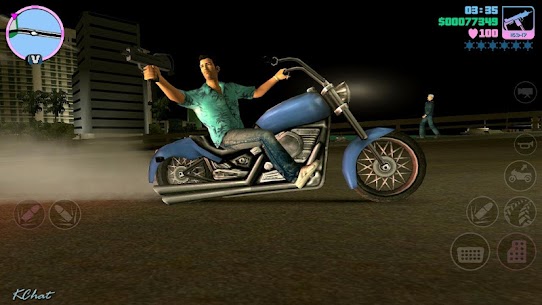
The vehicle roster in Vice City reflects the 80s aesthetic perfectly. Physics were improved from GTA III, with motorcycles added for the first time, completely changing how players navigated the city.
- Infernus: Based on the Lamborghini Countach. It is the fastest car in the game, with a distinctive wedge shape.
- Cheetah: Based on the Ferrari Testarossa. Famous for its excellent handling and speed. It is the preferred car of the police vice squad.
- Banshee: A returning classic, based on the Corvette C4. A convertible sports car that is great for stunt jumps.
- Deluxo: Based on the DeLorean DMC-12. While it doesn’t fly (in this game), it is a stylish, moderate-speed sports car.
- Cuban Hermes: A modified classic car with flames painted on the front. When you start the engine, it belches fire from the exhaust.
- Faggio: A slow, pink moped. It became a cult favorite for its absurdity and the “scooter brother” memes it eventually spawned.
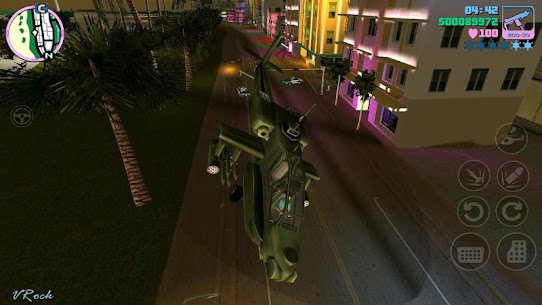
- Maverick: The standard helicopter. Unlocking air travel opened up the city in a way GTA III (which only had the clipped-wing Dodo) never did.
- Skimmer: A seaplane that lands on water. It was the only fixed-wing aircraft the player could properly fly.
The Sound of the 80s: The Radio Stations
If Vice City has a soul, it resides in its radio stations. The soundtrack is widely considered the greatest in video game history. Rockstar licensed real hits from the 1980s, curating a mix that covered every genre of the decade.
The audio experience is enhanced by the DJs, who are fully fleshed-out characters with hilarious dialogue, and the fake commercials that satirize American culture, consumerism, and the Cold War.
1. Flash FM (Pop)
- DJ: Toni (a valley girl obsessed with partying).
- Vibe: Upbeat, mainstream 80s pop.
- Key Tracks:
- Billie Jean – Michael Jackson (Getting into a car for the first time and hearing this baseline is a core memory for millions).
- Out of Touch – Hall & Oates.
- Video Killed the Radio Star – The Buggles.
- Self Control – Laura Branigan.
2. V-Rock (Rock/Metal)
- DJ: Lazlow (The recurring GTA radio personality, here portrayed as a long-haired rocker).
- Vibe: Hair metal, hard rock, rebellion.
- Key Tracks:
- 2 Minutes to Midnight – Iron Maiden.
- I Wanna Rock – Twisted Sister.
- Bark at the Moon – Ozzy Osbourne.
- Cum on Feel the Noize – Quiet Riot.
- Love Fist – Love Fist (A fictional in-game band created by Rockstar).
3. Fever 105 (Soul/R&B)
- DJ: Oliver “Ladykiller” Biscuit.
- Vibe: Groovy, sensual, disco-funk.
- Key Tracks:
- Wanna Be Startin’ Somethin’ – Michael Jackson.
- Act Like You Know – Fat Larry’s Band.
- Last Night a DJ Saved My Life – Indeep.
4. Emotion 98.3 (Power Ballads)
- DJ: Fernando Martinez (A sleazy Latin lover character).
- Vibe: Romantic, slow, melodramatic.
- Key Tracks:
- Africa – Toto.
- Broken Wings – Mr. Mister.
- Waiting for a Girl Like You – Foreigner.
- Crockett’s Theme – Jan Hammer (Pure Miami Vice atmosphere).
5. Wave 103 (New Wave)
- DJ: Adam First.
- Vibe: Synth-heavy, electronic, experimental.
- Key Tracks:
- I Ran (So Far Away) – A Flock of Seagulls.
- Cars – Gary Numan.
- Atomic – Blondie.
- Pale Shelter – Tears for Fears.
6. Espantoso (Latin Jazz/Salsa)
- DJ: Pepe.
- Vibe: Authentic Latin sounds, perfect for cruising Little Havana.
- Key Tracks: La Vida Es Una Lenteja (A catchy tune that translates to “Life is a Lentil”).
7. Talk Radio (VCPR & K-Chat)
The talk stations provided satirical commentary on the era. VCPR (Vice City Public Radio) featured “Pressing Issues” with Maurice Chavez, a debate show featuring a gun nut, a goth, and a nudist. It is a masterpiece of comedic writing.
Secrets, Easter Eggs, and Myths
Rockstar Games loves hiding secrets, and Vice City is packed with them.
Apartment 3C (The Scarface Bathroom)
Located in Ocean Beach, there is an unassuming apartment building (Apartment 3C). If the player enters, they find a bathroom covered in blood with a chainsaw pickup. This is a direct reference to the infamous scene in the movie Scarface where Angel is dismembered in a bathtub.
The Cement Shoes
In the waters near the Leaf Links Golf Club, if you look closely at the seabed (using a sniper rifle or camera), you can see a chubby man in boxer shorts standing on the ocean floor, his feet encased in a block of cement. A classic mafia execution method.
The “Easter Egg”
In the Downtown area, near the VCN building, there is a window that looks solid but is actually intangible. If Tommy jumps through it, he lands in a small, empty room. In the center of the room, on a pedestal, sits a literal chocolate Easter Egg with “Happy Easter” written on it. It is a literal interpretation of the term.
The Moon Trick
A recurring secret from GTA III. If the player shoots the moon with a sniper rifle, it changes size, growing larger or smaller with each shot.
Rockstar Constellation & Pools
At night, the stars in the sky form the Rockstar Games “R” logo. Additionally, on Starfish Island, one of the mansion pools is shaped like the Rockstar logo, while another is shaped like a bikini-clad woman’s torso.
The Submarine
Off the coast of North Point Mall, the wreckage of a submarine can be seen underwater. It serves no gameplay purpose but adds mystery to the world.
The Mobile Experience
In 2012, to celebrate the game’s 10th anniversary, Rockstar released Grand Theft Auto: Vice City for iOS and Android.
The Pros:
- Portability: Playing a full PS2-era open-world game on a phone was a technological marvel at the time.
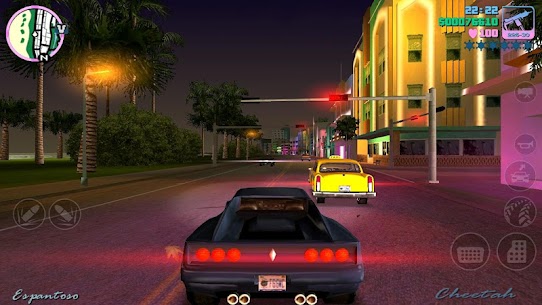
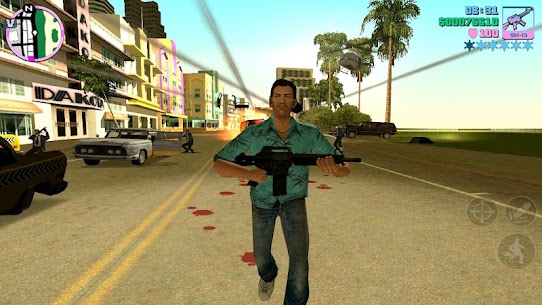
- Graphics: The mobile version featured high-resolution textures and character models that were actually sharper than the original console versions.
- Lighting: Enhanced lighting effects made the neon nights pop even more.
- Controls: Fully customizable touch controls, though driving could be finicky.
The Cons:
- Combat: Touchscreen shooting was difficult, requiring a heavy reliance on auto-aim.
- Bugs: Various audio and physics glitches were introduced.
- Music: Some songs (like Michael Jackson’s tracks) were temporarily removed in later updates due to licensing expirations, angering fans.
Despite the flaws, the mobile version remains a popular way to experience the game, with a 3.9-star rating on the Google Play Store.
The Definitive Edition (2021)
In 2021, Grand Theft Auto: The Trilogy – The Definitive Edition was released for modern consoles and PC.
The Good:
- Lighting Engine: The game was ported to Unreal Engine 4. The lighting system was completely overhauled. Neon signs now reflect accurately in puddles, sunsets are breathtaking, and shadows are dynamic.
- Controls: The control scheme was modernized to match GTA V. A weapon wheel was added, and drive-by mechanics were improved.
- GPS: A GPS line on the minimap (absent in the original) made navigation much easier.
The Bad:
- Character Models: The updated character models were widely criticized. Tommy looked too cartoonish, and side characters often looked distorted or plastic.
- Atmosphere: Some argued that the hyper-clean Unreal Engine look stripped away the gritty, hazy “heatwave” aesthetic of the original PS2 version.
- Launch Bugs: The release was plagued by technical issues, invisible bridges, and rain effects that made the game unplayable.
While many patches have fixed the bugs, the debate over whether the Definitive Edition captures the soul of the original continues.
Legacy and The Future
The Speedrunning Community
Vice City has a vibrant speedrunning community.
- Any%: The goal is to finish the story as fast as possible. The current world record (No SSU – Script Stack Underflow) sits around 50 minutes. Runners use precise movement and RNG manipulation to breeze through missions.
- 100%: This category requires completing every mission, side mission, rampage, stunt jump, and collecting all 100 hidden packages. It is a grueling marathon that takes the best players around 4.5 to 5 hours.
The Modding Scene
On PC, Vice City has been kept alive by modders for two decades.
- Vice City Rage: A mod that ported the Vice City map into the GTA IV engine, giving it advanced physics and ragdoll mechanics.
- Grand Theft Auto: Vice City Stories PC Edition: Since the prequel Vice City Stories was never released on PC, modders recreated the entire game as a Vice City mod.
- VHS/Retrowave Mods: Hundreds of mods exist to enhance the 80s aesthetic, adding VHS tracking lines, synth-wave radio stations, and realistic 80s car packs.
Influence on GTA VI
The legacy of Vice City is about to come full circle. Grand Theft Auto VI, scheduled for release in 2025, returns to the state of Leonida (Florida) and Vice City. The trailer for GTA VI shows a modern interpretation of the city, but the DNA is undeniable: the neon, the beaches, the excess.
Vice City (2002) proved that a video game could be more than just gameplay; it could be a vibe. It proved that a period piece could work in an open-world setting. It taught us that “Lance Vance Dance” is a cool rhyme, that real estate is a sound investment, and that you should never, ever trust a guy named Sonny.
Conclusion
More than 20 years later, Grand Theft Auto: Vice City remains a masterclass in open-world design. It is flawed by modern standards—Tommy can’t swim, the shooting is stiff, and the map is relatively small compared to GTA V. Yet, it possesses a charm that no other entry in the series has matched.
It is a perfect capsule of the 1980s, filtered through the lens of pop culture. It is Scarface meets Miami Vice playable on a PlayStation. For many, driving down Ocean Drive in an Infernus while “Billie Jean” plays on the radio as the sun sets over the palm trees is the quintessential gaming memory. It is a neon-soaked masterpiece that will never fade.
What's new
General bug fixes and improvements
Video
Download links
An ad will pop up before the download. Close it, click download again—ads keep us going, thanks!