GTA: Chinatown Wars

GTA Chinatown Wars Info
Looking for a Grand Theft Auto: Chinatown Wars APK Download? This definitive mobile version brings the complete Liberty City experience to your fingertips, featuring enhanced widescreen graphics and customizable touch controls. Unlike the original DS release, the Android APK offers high-resolution textures and lighting effects that breathe new life into Huang Lee’s story of retribution. Whether you want to master the addictive drug dealing economy or engage in explosive police chases using the unique takedown mechanics, downloading the APK ensures you have the most robust version of this arcade-style masterpiece ready to play anywhere.
Images
Related apps

Description
In the vast pantheon of Rockstar Games’ celebrated history, Grand Theft Auto: Chinatown Wars stands as a unique, somewhat paradoxical anomaly. Released in 2009, just a year after the grim, high-definition realism of Grand Theft Auto IV, this handheld entry seemed to look backward to the series’ top-down roots. Yet, for those who played it, Chinatown Wars was anything but a regression. It was a mechanical revolution—a masterclass in game design that compressed the living, breathing chaos of Liberty City into a cartridge the size of a postage stamp.
Table of Contents
Often cited by critics as the highest-rated Nintendo DS game of all time, yet frequently overlooked by the broader console audience, Chinatown Wars remains one of the most innovative titles in the franchise. It didn’t just port the GTA experience to handhelds; it reinvented it, introducing economic systems, touch-based interactivity, and a fast-paced arcade style that the series hasn’t seen since. This article delves deep into the history, mechanics, and enduring legacy of Huang Lee’s violent return to Liberty City.
Development: Shrinking the HD Universe
The Rockstar Leeds Ambition
The development of Chinatown Wars was spearheaded by Rockstar Leeds, a studio dedicated to the handheld market. Following their success with Liberty City Stories and Vice City Stories on the PSP—which were essentially technological miracles that brought the 3D era of GTA to portable screens—the team faced a new challenge: the Nintendo DS.
The DS was a hardware phenomenon, but it lacked the raw horsepower of the PSP. A direct port of the GTA III engine was impossible. Instead of forcing a compromised 3D third-person shooter onto the hardware, Rockstar Leeds made a bold creative pivot. They returned to the isometric, top-down perspective of the original Grand Theft Auto (1997) and GTA 2, but built it upon a modern 3D engine.
The Aesthetic Shift
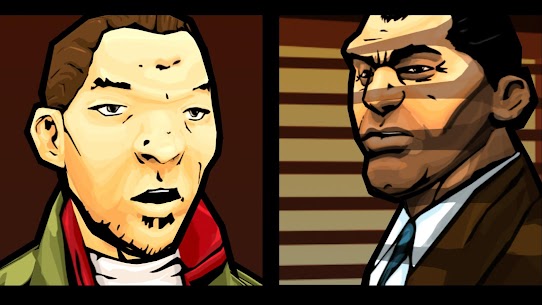
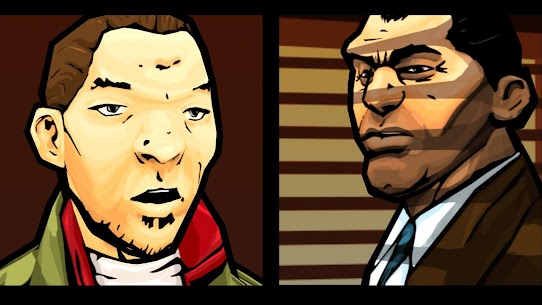
The result was a stunning cel-shaded art style, featuring bold black outlines and comic-book-style cutscenes. This wasn’t just an artistic choice; it was a technical necessity that allowed the game to run smoothly while rendering a massive open world. The game utilized a fully rotatable camera, allowing players to spin the view 360 degrees to see around skyscrapers—a feature that gave the flat world a surprising amount of verticality and depth.
The game is set in the “HD Universe” (the same timeline as GTA IV and GTA V), specifically in the year 2009. It features a faithful recreation of Liberty City, including the boroughs of Broker, Dukes, Bohan, and Algonquin. The only major omission was the state of Alderney, likely cut to save cartridge space. Despite this, the map felt enormous, complete with pedestrian AI, traffic patterns, and weather effects that rivaled home console releases.
The Narrative: Honor, Betrayal, and Rich Kids
Enter Huang Lee
Unlike the rags-to-riches stories of CJ or the immigrant struggles of Niko Bellic, Chinatown Wars introduces us to Huang Lee, a protagonist who starts at the top. Huang is the spoiled, 25-year-old son of a Triad boss from Hong Kong. He is rich, entitled, and largely unconcerned with the “family business” beyond spending his allowance.
The story kicks off with a brutal reality check. Following his father’s murder, Huang is tasked with delivering “Yu Jian”—an ancient family sword—to his Uncle Kenny in Liberty City. The sword is a symbol of leadership, intended to secure Kenny’s position as the successor to the aging Triad patriarch, Hsin Jaoming.
A Setup and a Fall
Things go wrong immediately. Upon arrival at Francis International Airport, Huang is ambushed. He is shot, robbed of the sword, and kidnapped. The assailants, believing him dead, dump the car into the Humboldt River. In one of the game’s first interactive moments, the player must use the touch screen to smash the rear window and escape the sinking vehicle.
Stripped of his wealth and his father’s heirloom, Huang is thrust into the gritty underworld of Liberty City. He is forced to work for his Uncle Kenny, a character who initially appears to be a traditional elder but is slowly revealed to be a power-hungry, insecure middle manager.
The Tone
The writing in Chinatown Wars marks a departure from the sombre, self-serious tone of GTA IV. While still violent and mature, the dialogue returns to the satirical, tongue-in-cheek humor of the Vice City era. Huang Lee himself is a standout character—sarcastic, cynical, and constantly breaking the fourth wall with his observations about the absurdity of the missions he’s assigned. He isn’t a tragic figure; he’s an asshole learning to be a gangster, and his banter with the eclectic cast of supporting characters (like the corrupt, drug-addled cop Wade Heston or the wannabe gangster Lester Leroc) is genuinely funny.
Gameplay Mechanics: Arcade Roots Meets Modern Design
The Core Loop
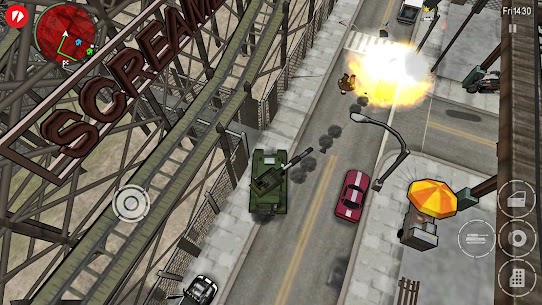
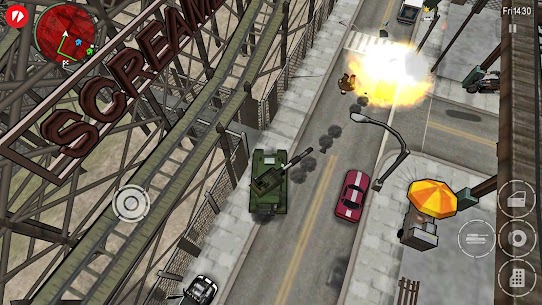
At its heart, Chinatown Wars is a classic GTA experience: drive cars, shoot bad guys, and complete missions. However, the execution is significantly faster. The top-down view encourages a more reckless driving style, and the auto-aim lock-on system makes combat feel snappy and arcade-like.
The Wanted System 2.0
One of the most distinct mechanical changes is the Wanted system. In previous games, escaping the police meant driving out of a circular “zone” on the mini-map. Chinatown Wars reinvented this.
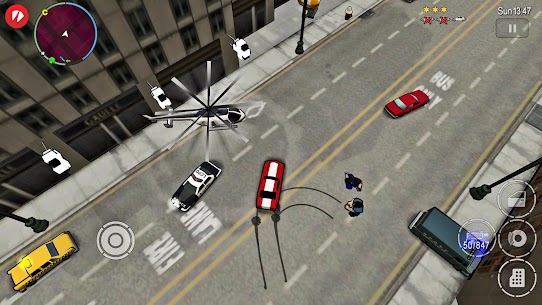
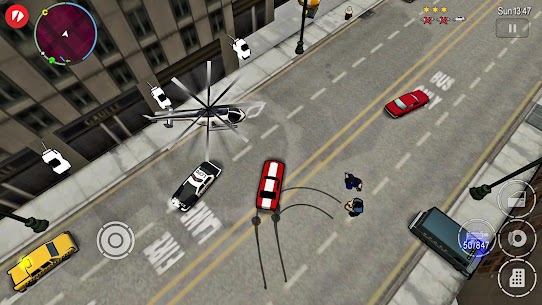
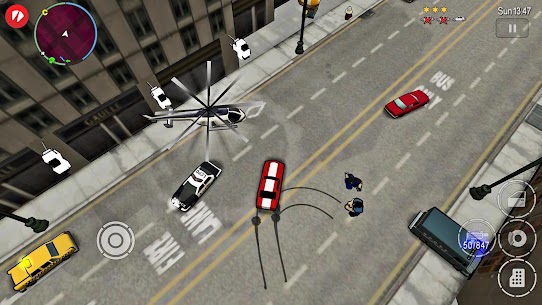
To lower your wanted level, you don’t just run; you fight back strategically. The game introduced a “takedown” mechanic where players must disable police cruisers. Smashing a cop car until it is wrecked removes one “star” from your wanted level. This turns police chases into aggressive vehicular combat matches rather than passive games of hide-and-seek. It was a brilliant change that rewarded aggression and utilized the game’s physics engine, although it arguably made escaping high wanted levels easier once you mastered the “PIT maneuver.”
The Touch Screen Integration
On the Nintendo DS and mobile versions, the touch screen is not a gimmick—it is essential. Rockstar Leeds gamified the mundane actions of criminal life through “micro-games.”
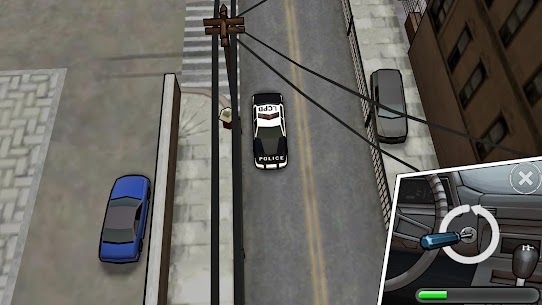
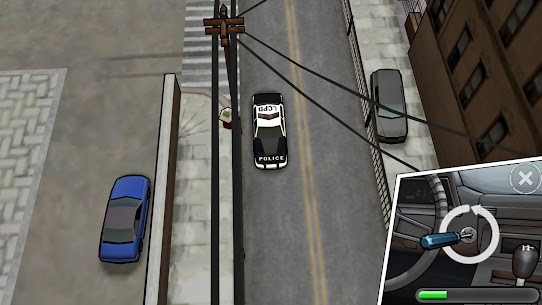
- Hotwiring Cars: Instead of just pressing a button to steal a parked car, players have to physically interact with the ignition. This might involve twisting a screwdriver, hotwiring cables together, or hacking an immobilizer with a PDA code sequence.
- Dumpster Diving: Players can search dumpsters for weapons or drugs by manually moving trash bags aside with the stylus.
- Tattoos: One mission involves carefully tracing a tattoo design onto a gang member.
- Molotovs: At the gas station, you physically fill bottles with gasoline to create Molotov cocktails.
These interactions immersed the player in the world in a tactile way that pressing ‘Y’ or ‘Triangle’ never could.
The Drug Dealing Economy: The Game’s Engine
If there is one feature that defines Chinatown Wars, it is the drug dealing minigame. It is arguably the deepest economic system ever implemented in a GTA game, surpassing even the stock markets of GTA V.
Supply and Demand
The economy revolves around six substances: Heroin, Coke, Ecstasy, Acid, Weed, and Downers. Scattered across Liberty City are 80 different dealers, each affiliated with different gangs (e.g., The Angels of Death, The Spanish Lords, The Mob).
The mechanic is simple but addictive: Buy Low, Sell High.
- Territory Matters: The Mob in Algonquin might pay a premium for Coke but sell Ecstasy for cheap. The bikers in Bohan might have an endless supply of Weed but are desperate for Heroin.
- Market Fluctuations: The economy is dynamic. Players receive emails on their in-game PDA (a crucial interface element) tipping them off to market spikes (“Bohan is dry on acid! Prices skyrocketing!”) or fire sales (“Police raid! Dumping stock cheap!”).
The Risk
Carrying drugs carries risk. If you are arrested while holding a stash, the police confiscate the drugs, potentially wiping out hours of profit. This adds a layer of tension to every police encounter. The player isn’t just worried about “wasting” and losing $100 for hospital bills; they are worried about losing the $50,000 shipment of Coke in their trunk.
This system incentivizes exploration. Players are driven to unlock all corners of the map not just for missions, but to find new dealers and trade routes. It transforms the open world from a backdrop into a living marketplace.
Technology and Interface: The PDA
In 2009, the smartphone revolution was just beginning, and Chinatown Wars reflected this beautifully with its PDA interface. The bottom screen of the DS (or the pause menu on other platforms) acts as Huang’s computer.
- GPS: For the first time in the series, the GPS would plot a valid path through traffic, with arrows physically drawn on the road in the top screen, allowing players to navigate without constantly glancing at the mini-map.
- Ammu-Nation: Gun shops were removed from the physical map. Instead, players order weapons online via the PDA, and the goods are delivered to their safehouse in a crate. This modernized the gameplay loop, making it feel more like ordering from a dark web Amazon.
- Email: The story progresses largely through emails from bosses and spam mail, which often contains humorous writing and world-building lore.
Platform Wars: DS vs. PSP vs. Mobile
Grand Theft Auto: Chinatown Wars has an interesting release history, and the version you play significantly changes the experience.
Nintendo DS (The Original)
- Pros: The game was built for this hardware. The dual-screen UI is clutter-free (map on bottom, action on top). The stylus controls for minigames are precise and satisfying. The cel-shaded graphics look crisp on the small, lower-resolution screen.
- Cons: Lower audio quality and no voice acting (text-only).
PlayStation Portable (The Powerhouse)
Released months later, the PSP version ditched the cel-shading for a more traditional, textured look.
- Pros: Better lighting effects, higher polygon count, and “widescreen” presentation. It included more music tracks and exclusive missions (featuring documentary filmmaker Melanie Mallard).
- Cons: The “minigames” were converted to QTEs (Quick Time Events) due to the lack of a touch screen, which lost some of the charm. The visuals, while “better,” sometimes looked muddy compared to the stylized DS look.
iOS and Android (The Modern Standard)
Released in 2010 and updated heavily in 2014.
- Pros: High-resolution graphics that blend the PSP’s textures with the DS’s vibrant colors. Customizable touch controls and support for physical Bluetooth controllers (which is highly recommended). It includes the PSP exclusive missions.
- Cons: Touch screen driving controls can be finicky for some players. The “novelty” of the stylus interactions is lost when using a finger.
Verdict: The mobile version (played on a modern tablet or phone with a controller) is arguably the “definitive” edition for content and visuals, but the Nintendo DS version remains the most “authentic” experience due to the hardware integration.
The Soundtrack: Turntablism and Instrumentals
Audio has always been a pillar of GTA, but Chinatown Wars took a different approach. Due to storage limitations on the DS cartridge, there are no talk radio stations, no commercial parodies, and very few licensed pop hits.
Instead, the game focuses on original instrumentals and high-energy electronic music. The soundtrack features station names like Tortoise (Post-rock), DFA (Dance-punk), and Turntables on the Hudson (World music). The music was produced by renowned artists like Deadmau5 and Truth & Soul using the game’s MIDI-like soundfont capabilities on DS, while PSP and Mobile received high-quality PCM audio versions.
The theme song, created by Ghostface Killah and Doom, is a standout track that perfectly captures the gritty, frantic energy of Huang Lee’s adventure.
Reception and Legacy
Critical Acclaim
Upon release, Chinatown Wars was a critical darling. It holds a Metacritic score of 93, making it the highest-rated game in the history of the Nintendo DS. Critics praised it for not compromising the GTA formula for a handheld, noting the sheer volume of content, the clever writing, and the addictive drug economy.
Commercial Slow Burn
Despite the rave reviews, the game initially struggled commercially. It sold below Rockstar’s expectations in its first month. Analysts blamed the “Mature” rating on a Nintendo platform (which was perceived as a console for kids) and the high piracy rates on the DS at the time. However, over the years and through ports to PSP and mobile, the game eventually found its audience and became profitable.
The Legacy
Chinatown Wars occupies a strange space in GTA history. It is often forgotten when fans discuss the “main” timeline, yet it introduced features that would become staples.
- The GPS pathfinding on the road appeared later in GTA V (during races).
- The weapon wheel selection UI was refined here before becoming standard in Red Dead Redemption and GTA V.
- The concept of managing a business (drug dealing) laid the groundwork for the CEO/Biker businesses in GTA Online.
Furthermore, it proved that top-down GTA could still work in the modern era. It bridged the gap between the frantic, arcade action of the PS1 era and the deep, systemic open worlds of the PS3 era.
Conclusion: A Must-Play Classic
Grand Theft Auto: Chinatown Wars is not just a spin-off; it is a masterpiece of efficiency and design. It stripped away the bloat that was beginning to plague open-world games and focused entirely on the gameplay loop: Drive fast, make money, cause chaos.
The narrative of Huang Lee—a man who loses everything only to rebuild an empire on the back of the narcotics trade—is compelling, funny, and surprisingly dark. The mechanical depth of the drug economy offers an endless endgame that other GTA titles lack.
Whether you download it from the Google Play Store for your Android device, dig out an old Nintendo DS, or emulate the PSP version, Chinatown Wars is a journey to Liberty City that every fan of the genre owes it to themselves to take. It is proof that you don’t need 4K graphics or a 100GB install file to create a world that feels alive, dangerous, and infinitely playable.
What's new
General bug fixes and improvements.
Download links
An ad will pop up before the download. Close it, click download again—ads keep us going, thanks!